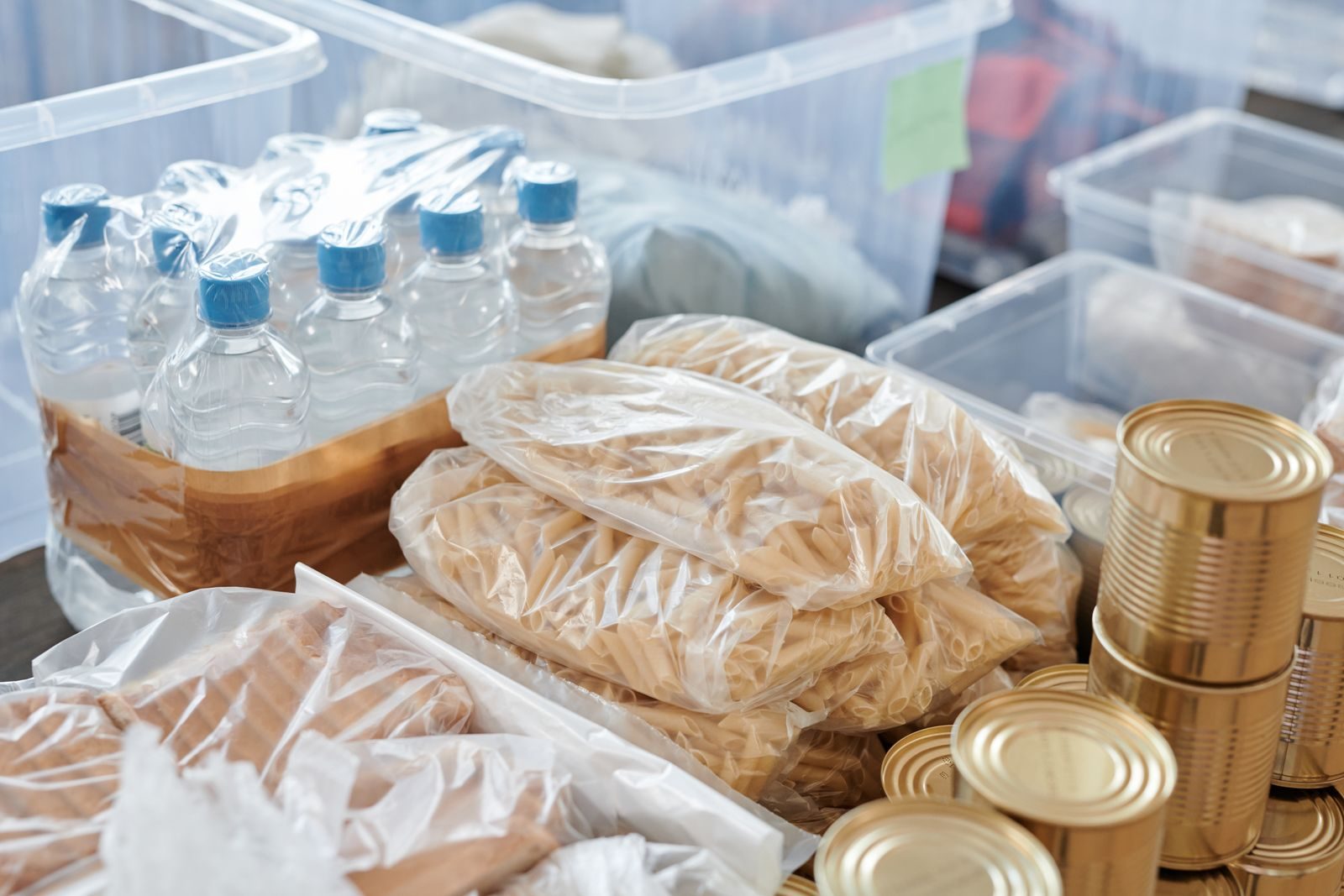
Seventy-two hours is Canada’s official minimum and a sensible first stage anywhere. Amounts below are per person for 3 days unless a line says otherwise, and a child (2 to 12) eats about three quarters of an adult’s share. The 72-hour kit in our builder sizes all of it for your household.
Water
- US: 3 gallons (about 11 L) per person (1 gal × 3 days)
- Canada: 12 L per person (4 L × 3 days)
- 12 small bottles (500 mL / 16.9 oz) per person, counted in the total
- Pets: 1.5 gal (6 L) per dog and 3 pints (1.5 L) per cat
- Plain unscented bleach under a year old, plus a dropper labelled “bleach only”: 2 drops per litre or 8 per gallon of 5.25 to 6% bleach
- Coffee filters for straining cloudy water
- Jugs of water frozen to fill the gaps in your freezer
Food
Per adult for 3 days, all no-cook, built around 2,000 calories a day.
- 3 ready-to-eat canned meals (15 to 19 oz / 425 to 540 mL)
- 3 small cans of tuna, chicken, salmon or beans
- 3 to 6 fruit cups or small cans of fruit
- 2 canned vegetables or vegetable juices
- 1 box of crackers and 1 box of cereal or granola
- 1 small jar of peanut or seed butter
- 6 granola or protein bars
- 1 small bag of trail mix or nuts
- 3 shelf-stable milk boxes (6 for a child)
- 9 each of paper plates, bowls and cups, and plastic cutlery
- Per household: a manual can opener, a long lighter and waterproof matches
- Optional: one 3,600-calorie ration pack per person for a grab-and-go bag
Light, power and radio
The light step of the kit builder works out how many lights and batteries your home needs.
- LED lanterns for the rooms you’ll sit in after dark
- Headlamps or flashlights
- Batteries in the sizes your lights and radio take, with the dates checked
- Charged power banks for your phones
- A battery, hand-crank or solar radio, for news and boil-water advisories
First aid, medicine and hygiene
- A first aid kit, plus a box each of bandages, antiseptic wipes and gloves
- Prescription medicines: 7 days minimum, 14 if you can
- Pain and fever relief, with children’s or infant versions if you have kids
- Anti-diarrhea medicine and antacids
- Spare glasses, contact lens solution and hearing aid batteries
- Hand sanitizer with at least 60% alcohol: 1 bottle (about 250 mL / 8 oz) per 2 people
- Toilet paper: 1 roll per person, at least 4 rolls
- 3 heavy-duty garbage bags, one for each day
- Toothbrushes, toothpaste and menstrual supplies
Documents and cash
- Cash in small bills and coins: card readers and ATMs need power
- Copies of ID and insurance papers and a list of medicines and doses, sealed in a gallon zip bag
- Babies: medical and vaccination records
- Pets: records, medication doses, your vet’s contact details and a photo of you with your pet
Baby extras
Per baby for 3 days.
- 24 diapers (36 for a newborn)
- 90 wipes, and at least 2 packs
- 96 oz (2.8 L) of ready-to-feed formula, if your baby is formula-fed
- 12 to 24 months: 48 oz (1.4 L) of shelf-stable whole milk and 9 baby food pouches or jars
- Diaper rash cream, gallon zip bags and disposable cups
- Breastfeeding: a manual pump, 1 to 2 boxes of nursing pads and milk storage bags
- Infant acetaminophen, an infant thermometer and a bulb syringe
Pet extras
Per pet for 3 days. Their water is in the water list above.
- 3 days of food at the daily amount on the bag
- 14 days of any medication
- Collar with ID tag, leash or harness, and a carrier
- A collapsible bowl
- Cats: about 3 lb (1.4 kg) of clumping litter
- Dogs: poop bags and a pack of puppy pads
- A pet first aid kit
Keep it fresh
Replace water you bottled yourself every six months (CDC), and refresh food, batteries and medicine at least once a year (Public Safety Canada). The CDC suggests checking a baby kit monthly.
When you want to go past 3 days, our guide to how long to prepare for explains when 7 or 14 days makes sense.
Sources (14)
- Public Safety Canada, Emergency kits
- Public Safety Canada, Emergency kit checklist
- Public Safety Canada, Emergency preparedness for pets and service animals
- Health Canada, Food and drinking water safety in an emergency
- Canadian Red Cross, Emergency kit list
- Ready.gov, Build a Kit
- Ready.gov, Water
- Ready.gov, Pets
- CDC, How to Create an Emergency Water Supply
- CDC, Emergency List for Families With Infants and Young Children
- EPA, Emergency Disinfection of Drinking Water
- American Red Cross, Survival Kit Supplies
- FDA, How to Understand and Use the Nutrition Facts Label
- AVMA, Pet evacuation kit checklist
Turn the advice into a shopping list
Tell us who lives at home and how many days you want to cover. We work out the amounts, you pick what to buy and what you already have.
Build a kit for your household
About 5 minutes. We work out the amounts for you.