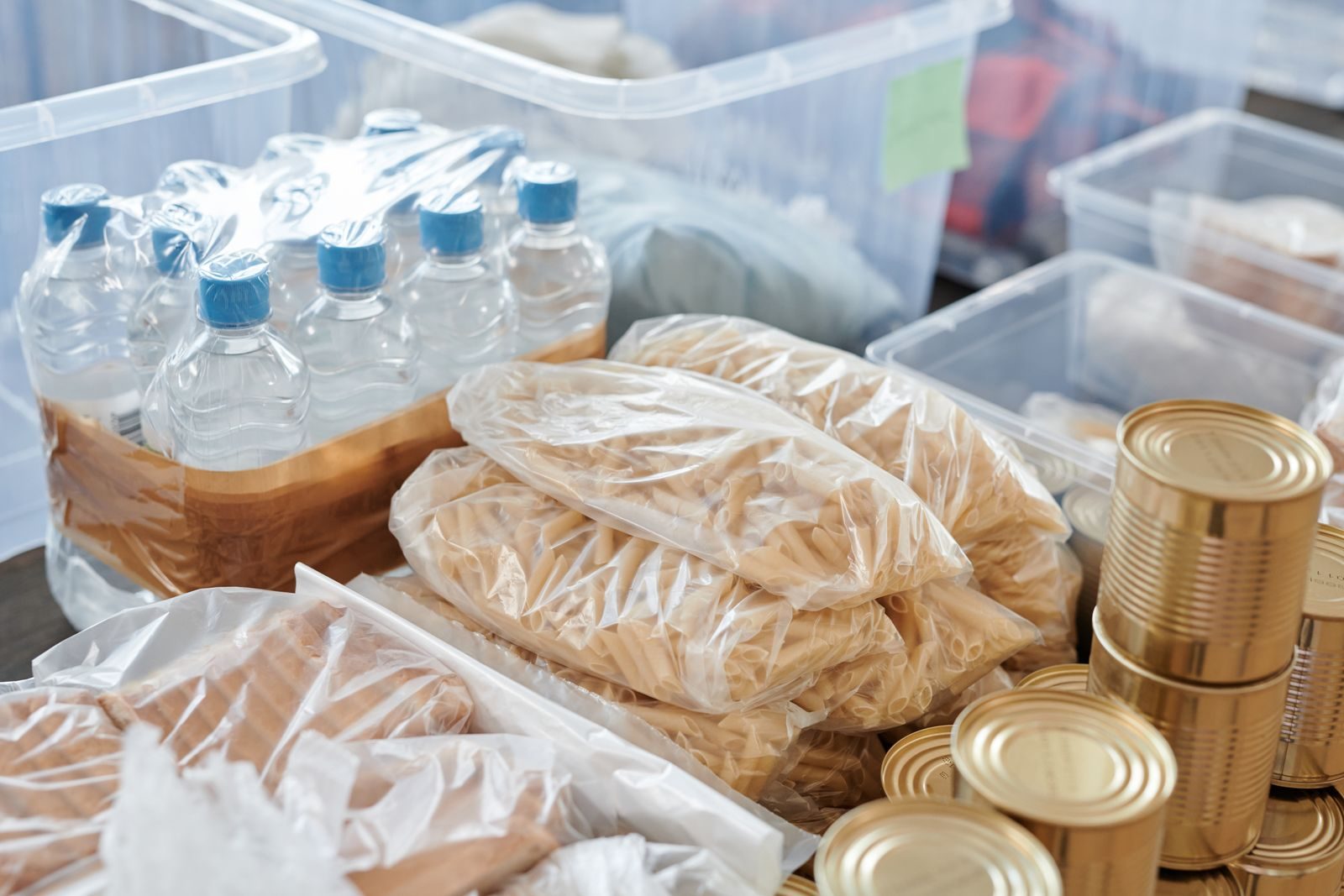
Baby and pet supplies are hard to improvise once the power is out, so keep them sealed and counted. Plan on 8 diapers and about 30 wipes per baby per day, up to 32 oz (about 1 L) of ready-to-feed formula for a formula-fed baby, and as many days of pet food as people food.
Feeding a baby without power
If you’re breastfeeding
Keep going. “During a natural disaster, breastfeeding is the safest way to feed an infant,” the CDC says. Its checklist adds a manual breast pump in case the power is out, one or two boxes of disposable nursing pads, and a small cooler with ice packs.
Expressed milk can travel in a cooler or insulated bag with frozen ice packs for up to 24 hours. Thawed milk can’t be refrozen, and the CDC says to throw out unused thawed milk after 24 hours. Fill empty freezer space so frozen milk stays cold longer. Drink plenty yourself: Ready.gov notes that nursing mothers may need more water.
If your baby takes formula
Ready-to-feed formula is the CDC’s safest choice for formula feeding in an emergency. It comes in sterile, single-use containers and needs no water. Unopened, it doesn’t need a fridge: keep it somewhere cool and dry.
The American Academy of Pediatrics says babies take about 2½ oz (75 mL) of formula a day per pound of body weight, and no more than an average of about 32 oz (960 mL) in 24 hours. We plan the full 32 oz a day so you never run short: 32 oz × 7 days = 224 oz (6.6 L) for a week.
Keep a tin of powdered formula as a backup only. The CDC’s rules for it without power: mix with bottled water until authorities say the tap is safe, use the exact amounts on the label, make a fresh bottle for every feed, use it within 1 hour of starting the feed, and throw out what’s left. If you can’t wash bottles and nipples with safe water, feed from a disposable cup instead. Allow about 1 L of bottled water for every 32 oz of made-up formula.
Formula in the fridge
Throw away any opened or prepared formula that was in the fridge once the power has been off 4 hours or more (CDC). Never water formula down to make it last.
Toddlers
From 12 months, babies can move to whole milk. The AAP suggests about 16 oz (2 cups) a day at 12 to 24 months, plus 8 to 32 oz of water. Shelf-stable whole milk in single-serve boxes means nothing needs a fridge once opened. Add nonperishable baby food and snacks, which the CDC lists for its emergency kit; we allow 3 pouches or jars a day.
Diapers and wipes
Pampers puts newborns at 8 to 12 diapers a day in the first month, falling to 6 to 8 by 9 to 12 months. By size, it’s up to 7 a day for sizes 3 and 4. We plan 8 per baby per day, which leaves a spare for bad days, and 12 for a newborn. If your baby is close to the next size, buy that size.
Wipes stand in for baths and handwashing when water is short, so we allow about 30 a day: roughly 3 per change, plus hands and faces. The CDC suggests at least two packs. Its checklist also includes diaper rash cream, gallon-size zip bags for used diapers, and infant acetaminophen, an infant thermometer and a bulb syringe. Check the baby kit monthly, as the CDC advises.
Per-day amounts for babies and pets
Each line is for one baby or one pet. Water shows the US amount, then the Canadian one.
| Item | Per day | 3 days | 7 days | 14 days |
|---|---|---|---|---|
| Diapers | 8 | 24 | 56 | 112 |
| Diapers, newborn | 12 | 36 | 84 | 168 |
| Baby wipes | 30 | 90 | 210 | 420 |
| Ready-to-feed formula (under 12 months) | 32 oz (946 mL) | 96 oz (2.8 L) | 224 oz (6.6 L) | 448 oz (13.2 L) |
| Whole milk (12 to 24 months) | 16 oz (473 mL) | 48 oz (1.4 L) | 112 oz (3.3 L) | 224 oz (6.6 L) |
| Baby food pouches or jars (6 to 24 months) | 3 | 9 | 21 | 42 |
| Water per dog | ½ gal / 2 L | 1.5 gal / 6 L | 3.5 gal / 14 L | 7 gal / 28 L |
| Water per cat | 1 pint / 0.5 L | 3 pints / 1.5 L | 7 pints / 3.5 L | 14 pints / 7 L |
| Cat litter, clumping clay | 1 lb (0.45 kg) | 3 lb (1.4 kg) | 7 lb (3.2 kg) | 14 lb (6.4 kg) |
| Pet food | Daily amount on the bag | × 3 | × 7 | × 14 |
Babies also count as a full person for water, since formula and washing both need it. Litter figures come from pet sites rather than an official source; lightweight litter is about half the weight for the same use. When you add babies or pets in the kit builder, it adds diapers, wipes, formula and pet gear sized to the days you choose.
Pets need a kit too
Ready.gov’s pet kit covers food in an airtight, waterproof container, water and a bowl, medicine, a first aid kit, a collar with ID tag and a leash or harness, a crate or travel bag, sanitation supplies, a photo of you with your pet, and something familiar. Public Safety Canada adds the pet’s records, medication doses and your vet’s contact details.
- Food: Public Safety Canada says at least 72 hours; the AVMA suggests 3 to 7 days. We match the days you plan for people. Opened cans spoil without a fridge, so canned food should be one meal per can.
- Water: Public Safety Canada’s figure is 4 L a day per average dog and 1 L per cat. A vet rule of thumb (PetMD) is about 1 oz per pound of body weight, so we plan ½ gal (2 L) per pet: right for most dogs and plenty for a cat. Use Canada’s 4 L for big dogs in hot weather.
- Medicine: two weeks’ supply, as the AVMA suggests, whatever length you plan for.
- Mess: a roll of poop bags per dog per week and a pack of puppy pads for storm days when walks are short, plus litter and a litter box for cats.
Shelters and pets
If you ever have to leave home, know that most evacuation shelters accept only service animals, according to Public Safety Canada. List pet-friendly hotels, boarding kennels, vet clinics and friends who could take your animals now, while it’s calm.
If you have to leave pets behind, Public Safety Canada says not to tie them up or cage them. Leave food and water, and post a sign on the door saying which animals are inside.
Babies and carbon monoxide
The CDC lists babies and pregnant women among the people most at risk from carbon monoxide. Keep generators, grills and camp stoves outside, and run a battery-powered CO alarm in the house.
Sources (14)
- CDC, Facts About Infant Feeding During Emergencies
- CDC, Special Considerations for Infant Feeding in Emergencies
- CDC, Prepare and Store Powdered Infant Formula in an Emergency
- CDC, Emergency List for Families With Infants and Young Children
- CDC, Clinical Guidance for Carbon Monoxide Poisoning
- AAP HealthyChildren.org, Amount and Schedule of Formula Feedings
- AAP HealthyChildren.org, Recommended Drinks for Young Children
- Pampers, How many diapers a day
- Ready.gov, Water
- Ready.gov, Pets
- Public Safety Canada, Emergency preparedness for pets and service animals
- AVMA, Pet evacuation kit checklist
- PetMD, How Much Water Should a Dog Drink?
- Catster, How much cat litter per month
Turn the advice into a shopping list
Tell us who lives at home and how many days you want to cover. We work out the amounts, you pick what to buy and what you already have.
Build a kit for your household
About 5 minutes. We work out the amounts for you.