Give everyone at home a headlamp, add a battery lantern for the room you’ll live in and one for the bathroom, and keep the spare batteries in the same box. Leave candles out of the plan: the CDC, the CPSC and Public Safety Canada all say to use flashlights instead. A family of four planning a winter week needs about 36 AAA and 24 AA.
Headlamps, lanterns and flashlights
- Headlamps are the everyday light. Ready.gov says to have a flashlight for every household member, and a headlamp keeps both hands free for cooking, stairs and helping kids.
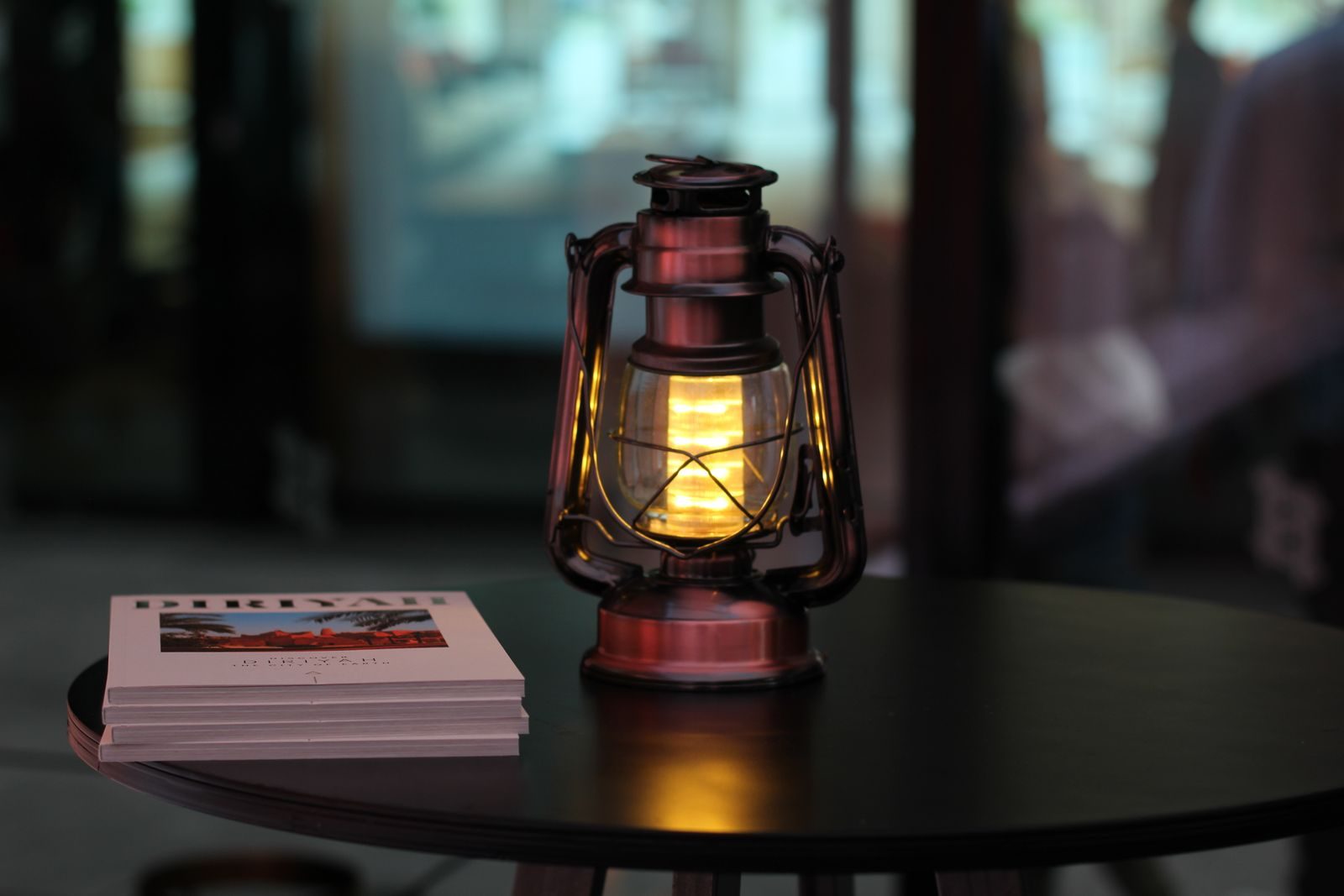
- Lanterns light a room rather than a spot. Hang one high, from a hook or a cupboard handle, so it lights the whole room and not just the table. Keep a small one in the bathroom all night.
- Flashlights are optional if everyone has a headlamp, but handy by each bed and in the car. One per adult is plenty.
One bright room beats four dim ones. It keeps everyone together, and in winter it keeps the heat in one place. Without a lantern, strap a headlamp to a jug of water with the light facing in, and the jug glows like a lamp.
How many lights for your household
Count everyone aged 2 and up; babies don’t need their own light. Plan one headlamp per person and one lantern for every two people, rounded up, with at least 2 of each in any home. That gives you a lantern for the main room and one for the bathroom, with more for bigger families.
| People aged 2 and up | Headlamps | Lanterns |
|---|---|---|
| 1 or 2 | 2 | 2 |
| 3 | 3 | 2 |
| 4 | 4 | 2 |
| 5 | 5 | 3 |
| 6 | 6 | 3 |
How many batteries
Batteries come down to how many hours a day you use each light and how long one set lasts. These are our planning estimates, not lab results:
- Headlamp: 3 AAA, about 2 hours a day, about 10 hours per set (between the 5 hours a typical headlamp gets on medium and the 200 it gets on low).
- AA lantern: 4 AA, about 5 hours a night in winter and 3 in summer, about 25 hours per set on medium.
- D lantern: 4 D, the same hours, about 60 hours per set.
Sets needed = days × hours a day ÷ hours per set, rounded up, plus one spare. For a winter week, each lantern needs 7 × 5 ÷ 25 = 1.4, rounded up to 2, plus a spare, so 3 sets. Two lanterns × 4 AA × 3 sets = 24 AA.
Here’s the full count for 2 adults and 2 children in winter, with 4 headlamps and 2 AA lanterns:
| Days | Headlamp sets | AAA (4 headlamps × 3) | Lantern sets | AA (2 lanterns × 4) |
|---|---|---|---|---|
| 3 | 2 | 24 | 2 | 16 |
| 7 | 3 | 36 | 3 | 24 |
| 14 | 4 | 48 | 4 | 32 |
Summer evenings are shorter, so a week needs 16 AA instead of 24. Two D lanterns for a winter week take 16 D. If your radio runs on AA or AAA, add one spare set for it. The light step of the kit builder does these sums for your household, season and lantern type.
Use low mode
Most lights run far longer on low. REI lists the Black Diamond Spot 400 headlamp at about 2.5 hours on high, 5 on medium and 200 on low, all from the same three AAA batteries. Low lasts 40 times longer than medium, and it’s plenty for getting around the house.
Lanterns vary as much. Energizer claims up to 150 hours on high and 650 on low for its 500-lumen 360° lantern, while Coleman’s 1,000-lumen lantern claims 14 hours on high from 4 D cells. Go by your own light’s numbers, save high for outdoor jobs, and show the kids which button does what before the power goes out.
Alkaline, lithium or rechargeable
- Alkaline is the usual choice. Energizer rates its MAX AA at up to 10 years in storage.
- Lithium is lighter and keeps longer. Energizer rates its Ultimate Lithium AA and AAA at up to 20 years in storage on US packs.
- Rechargeable lights and cells need something to charge from, such as a power station, a solar panel or the car, plus a charger for loose cells. We plan about 5 Wh a day per rechargeable light. Anker says a 10,000 mAh power bank delivers roughly 24 Wh, so one bank refills one light for about five days.
Whatever you buy, keep the spares sealed in their packs, in one box with the lights, and check the date on the pack. Take batteries out of lights you won’t use for months, since old cells can leak.
Why we leave candles out
US fire departments respond to an average of 5,894 home fires a year started by candles, with 63 deaths and 532 injuries, according to NFPA figures for 2020 to 2024. Over half start when something that burns, such as bedding, curtains or paper, is too close to the flame. More than a third (36%) start in a bedroom, and sleep was a factor in 34% of candle fire deaths.
That’s why the CDC, the CPSC and Public Safety Canada all advise flashlights over candles in an outage. Public Safety Canada’s kit checklist still lists candles with waterproof matches, but the same department’s outage page says to use flashlights. Keep the matches and lighter for the camp stove.
If you do light a candle
Use a sturdy holder and keep it 12 in (30 cm) from anything that can burn (Ready.gov). Stay in the room with it, and put it out before you leave or go to sleep (CDC, CPSC). Never leave children alone near a lit candle. Flameless LED candles are the safer swap (Ready.gov).
Fuel lanterns stay outdoors
Propane, kerosene and white-gas lanterns are for outdoors
Indoors they give off carbon monoxide and add a fire risk. Health Canada says never to use kerosene, propane or oil lamps in enclosed areas unless they’re designed for indoor use, and the CDC lists gas lanterns alongside candles as lights to avoid. Use battery or rechargeable lights inside.
Our picks
What the kit builder suggests right now, in the order we would pick them.
LED lanterns
- Lichamp collapsible lantern, 4-pack on Amazon (opens in a new tab) 4 lanterns · collapsible · AA batteries $41.99
- Lepro collapsible lantern, 2-pack on Amazon (opens in a new tab) 2 lanterns · collapsible · AA batteries $16.99


Headlamps
- Energizer LED Headlamp PRO, 4-pack on Amazon (opens in a new tab) 4 headlamps · AAA batteries · IPX4 $22.81
- EVEREADY Pro200 headlamp, 5-pack on Amazon (opens in a new tab) 5 headlamps · AAA batteries included $17.72


AA and AAA batteries
- Amazon Basics AA+AAA, 48-pack on Amazon (opens in a new tab) 24 × AA + 24 × AAA alkaline $16.70
- Powermax ACDelco AA+AAA, 48 on Amazon (opens in a new tab) 24 × AA + 24 × AAA alkaline · 10-yr shelf life $15.98


LED lanterns
- Blukar rechargeable lantern on Amazon (opens in a new tab) 1 lantern · rechargeable · 7 modes $19.99
- Lepro collapsible lantern, 4-pack on Amazon (opens in a new tab) 4 lanterns · collapsible · batteries $61.19


Headlamps
- EverBrite headlamp, 5-pack on Amazon (opens in a new tab) 5 headlamps · batteries · red light $39.99
- Lepro headlamp, 2-pack on Amazon (opens in a new tab) 2 headlamps · batteries · 6 modes $29.99


AA and AAA batteries
- Amazon Basics AA+AAA, 48-pack on Amazon (opens in a new tab) 24 × AA + 24 × AAA alkaline $21.40
- Powermax AA+AAA, 48-pack on Amazon (opens in a new tab) 24 × AA + 24 × AAA alkaline · 10-yr shelf life $19.99

Prices are the last we saw on Amazon and may have changed. Outage Kits earns a commission on qualifying Amazon purchases; it doesn't change what we suggest.
Sources (14)
- Ready.gov, Power outages
- Ready.gov, Home fires
- CDC, What to do to protect yourself during a power outage
- CPSC, As winter storms impact millions, CPSC issues safety tips
- Public Safety Canada, Power outages: how to prepare
- Public Safety Canada, Emergency kit checklist
- Health Canada, Carbon monoxide: preventing exposure
- NFPA, Safety with candles
- REI, Black Diamond Spot 400 headlamp
- Do it Best, Energizer WeatheReady 360° LED lantern
- Scheels, Coleman 1000 lumens LED lantern
- Grange Co-op, Energizer MAX AA
- Do it Best, Energizer Ultimate Lithium AA
- Anker, 20000mAh power bank: how many charges
Turn the advice into a shopping list
Tell us who lives at home and how many days you want to cover. We work out the amounts, you pick what to buy and what you already have.
Build a kit for your household
About 5 minutes. We work out the amounts for you.