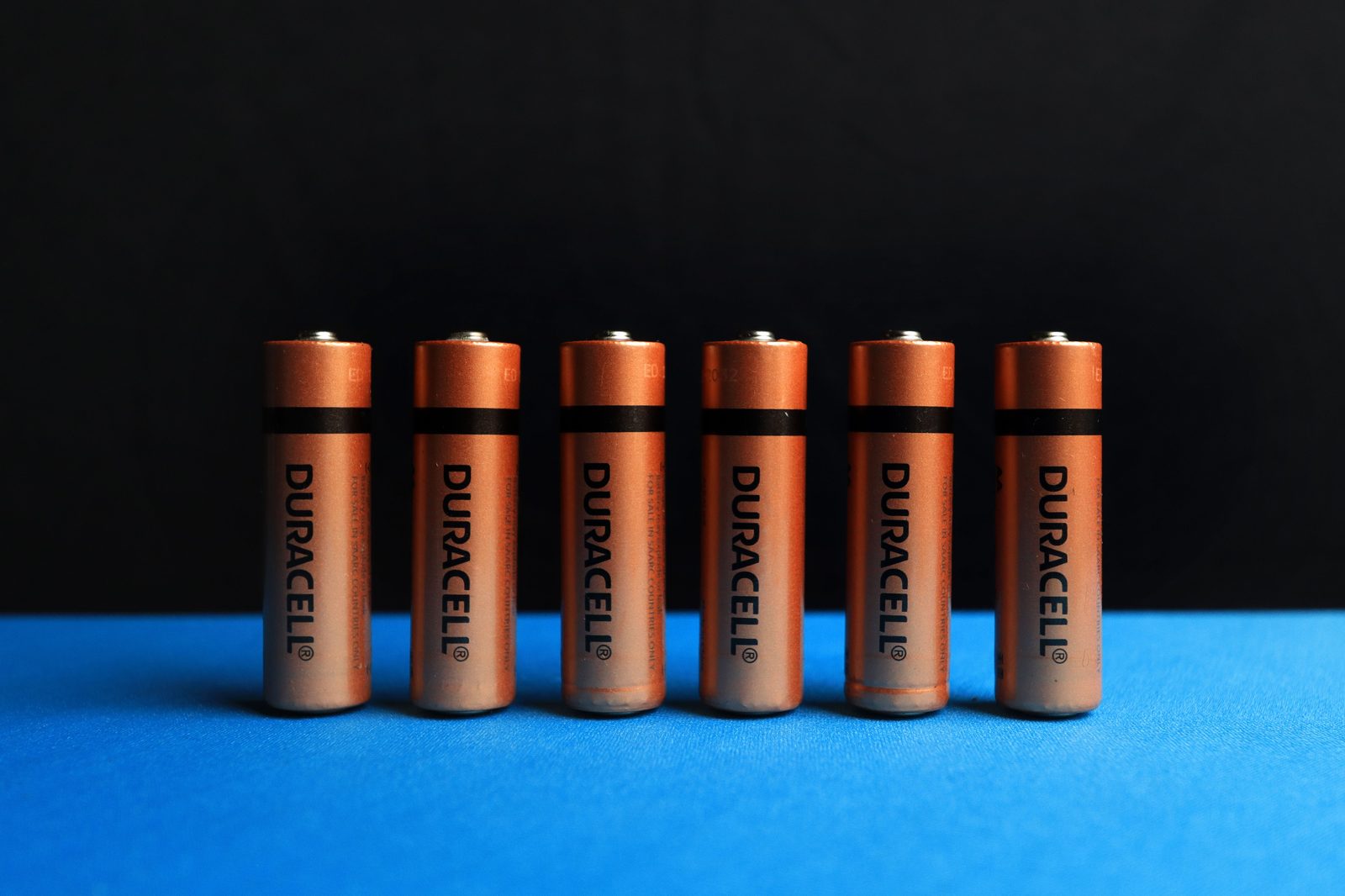
For most homes, a combo pack of alkaline AA and AAA batteries is the right buy: they keep for 10 years or more and run the lanterns and headlamps in our kits. A family of four needs about 24 AA and 36 AAA for a winter week, so two packs of 24 AA and 24 AAA. Lithium cells keep longer and work in the cold; rechargeables suit homes with a power station or solar panel.
How many your household needs
Ready.gov and Public Safety Canada both list extra batteries in a basic kit. Our count is for one headlamp per person (3 AAA, about 2 hours a day) and a lantern for every two people (4 AA, about 5 hours on a winter evening), plus one spare set each. These are our planning numbers; our guide to lights and batteries shows the working.
| People aged 2 and up | Headlamps | Lanterns | AAA for a winter week | AA for a winter week |
|---|---|---|---|---|
| 1 or 2 | 2 | 2 | 18 | 24 |
| 3 | 3 | 2 | 27 | 24 |
| 4 | 4 | 2 | 36 | 24 |
| 5 | 5 | 3 | 45 | 36 |
| 6 | 6 | 3 | 54 | 36 |
For a family of four, 3 days takes 24 AAA and 16 AA, and 14 days takes 48 AAA and 32 AA. Summer evenings are shorter, so a summer week needs 16 AA instead of 24. Then add:
- One spare set for the radio, if it takes AA or AAA.
- One spare set for each smoke and CO alarm that takes replaceable batteries. Sealed 10-year alarms don’t need them.
The batteries row in the power step of the kit builder counts the cells for the lights you choose and suggests how many packs to buy.
Alkaline, lithium or rechargeable
| Type | Keeps in storage | Best for |
|---|---|---|
| Alkaline | Up to 10 years (Energizer MAX); Duracell guarantees its Coppertop for 12 | Most lights, radios and alarms |
| Lithium | Up to 20 years (Energizer Ultimate Lithium) | The car, a cold garage and lights you rarely use |
| Rechargeable (NiMH) | Keeps 70% of its charge after 10 years (Panasonic eneloop) | Homes with a power station, solar panel or car to charge from |
Alkaline
This is the everyday choice. Energizer rates its MAX AA at up to 10 years in storage, and Duracell guarantees its Coppertop AA and AAA for 12 years in storage. Combo packs that hold both sizes in one box are the easy way to cover headlamps and lanterns at once.
Lithium
Lithium AA and AAA keep the longest and handle cold well. Energizer rates its Ultimate Lithium at up to 20 years in storage on US packs, says it works from -40°F to 140°F (-40°C to 60°C), and that it weighs a third less than alkaline. That makes it a good fit for a car kit or a box in an unheated garage.
Rechargeable
Panasonic’s eneloop cells come charged, so they work straight from the pack, and Panasonic estimates they keep 70% of their charge after 10 years in storage at 20°C (68°F). They recharge hundreds of times. They run at 1.2 volts rather than alkaline’s 1.5, but Panasonic says they work in almost any device that takes standard batteries, except ones with airtight battery compartments such as waterproof flashlights.
Rechargeables only help if you can charge them in an outage. Keep two sets per light, one in use and one charging, plus a charger that runs from USB, a power station or the car.
Storing them
- Room temperature, dry, in the pack. Duracell says to keep batteries in their original packaging, in a dry place at normal room temperature. Both Duracell and Energizer say the fridge isn’t necessary.
- Tape loose cells. Energizer suggests a strip of insulating tape across the contacts of loose batteries.
- Keep them with the lights. One box with the headlamps, lanterns and spares means no hunting in the dark.
- Take them out of lights you won’t use for months. Duracell advises removing batteries from devices that won’t be used for several months.
- Don’t mix. Old and new cells, or different brands or types, in one device can leak (Duracell, Energizer). Replace the whole set at once.
- Check the date printed on the pack when you check the rest of your kit.
When they’re used up
In most US communities, single-use alkaline batteries can go in the household trash, but rechargeable and lithium batteries shouldn’t go in the trash or the recycling bin (EPA). California is the exception: no batteries in the trash at all (California DTSC). In Canada, Call2Recycle’s drop-off program takes single-use and rechargeable household batteries and asks that none go in the trash.
Our picks
What the kit builder suggests right now, in the order we would pick them.
- Amazon Basics AA+AAA, 48-pack on Amazon (opens in a new tab) 24 × AA + 24 × AAA alkaline $16.70
- Powermax ACDelco AA+AAA, 48 on Amazon (opens in a new tab) 24 × AA + 24 × AAA alkaline · 10-yr shelf life $15.98
- Energizer MAX AA+AAA, 48-pack on Amazon (opens in a new tab) 24 × AA + 24 × AAA alkaline $35.92
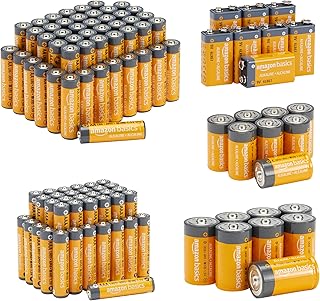
- Amazon Basics variety pack, 108 on Amazon (opens in a new tab) 48 AA + 36 AAA + 8 C + 8 D + 8 × 9 V alkaline $44.99


- Amazon Basics AA+AAA, 48-pack on Amazon (opens in a new tab) 24 × AA + 24 × AAA alkaline $21.40
- Powermax AA+AAA, 48-pack on Amazon (opens in a new tab) 24 × AA + 24 × AAA alkaline · 10-yr shelf life $19.99
- Energizer MAX AA+AAA, 48-pack on Amazon (opens in a new tab) 24 × AA + 24 × AAA alkaline $49.21
- Duracell Coppertop AA+AAA, 48 on Amazon (opens in a new tab) 24 × AA + 24 × AAA alkaline $39.96


Prices are the last we saw on Amazon and may have changed. Outage Kits earns a commission on qualifying Amazon purchases; it doesn't change what we suggest.
Sources (14)
- Ready.gov, Build a kit
- Public Safety Canada, Emergency kit checklist
- Grange Co-op, Energizer MAX AA
- Duracell, Coppertop AA
- Duracell, Coppertop AAA
- Do it Best, Energizer Ultimate Lithium AA
- Energizer, Ultimate Lithium AA
- Panasonic Canada, eneloop
- Duracell, Battery care, use and disposal
- Duracell, Frequently asked questions
- Energizer, Battery care
- EPA, Used household batteries
- California DTSC, Universal waste for residents: batteries
- Call2Recycle, Battery recycling in Canada
Turn the advice into a shopping list
Tell us who lives at home and how many days you want to cover. We work out the amounts, you pick what to buy and what you already have.
Build a kit for your household
About 5 minutes. We work out the amounts for you.