When the power goes, home internet goes with it and phone networks get busy, but radio keeps working. Keep a battery or crank radio, enough power-bank charges for every adult, and a paper list of phone numbers. Then, as soon as the lights go out, switch your phone to low-power mode and text rather than call.
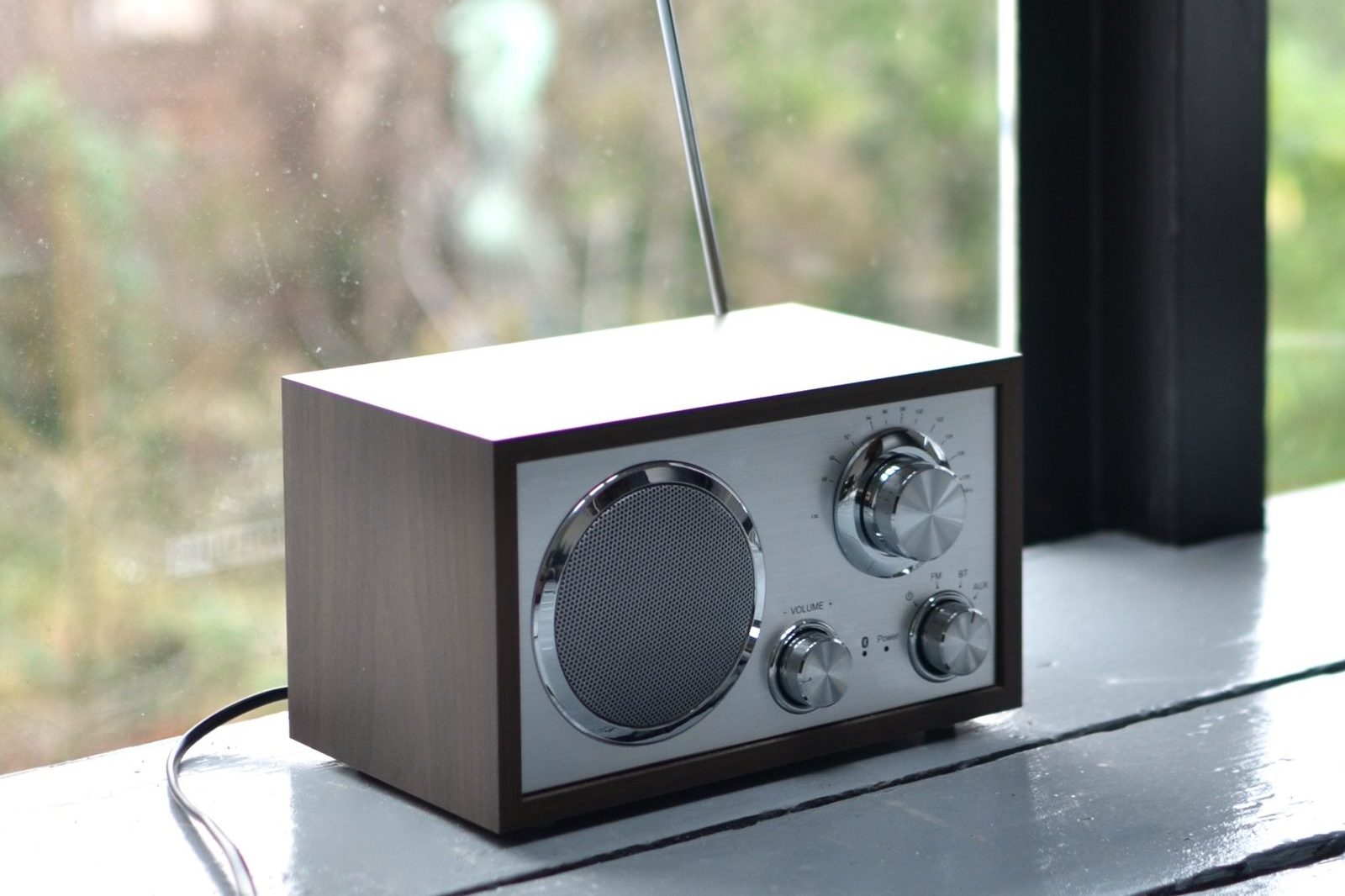
A radio that works without power
Public Safety Canada says to keep a crank or battery radio in case the internet is down, and to tune in to a local station during an outage. Ready.gov’s kit list asks for a battery or hand-crank radio and a NOAA Weather Radio with a tone alert. Which radio makes sense depends on your side of the border.
In the US: NOAA Weather Radio and SAME
NOAA Weather Radio broadcasts 24 hours a day from more than 1,000 transmitters, covering all 50 states, coastal waters and US territories on seven VHF frequencies between 162.400 and 162.550 MHz. You need a radio built to receive it.
Look for the Public Alert logo, which means the radio meets standards that include SAME, battery backup and a tone alarm. With SAME you enter your county code (online, or by calling 1-888-NWR-SAME), and the radio alarms only for warnings in your area. A 1050 Hz tone before most warnings switches it on even with the volume down. The National Weather Service puts basic SAME receivers at about $25 to $80.
Many crank radios can’t sound an alert, so check the specs for “alert” or “SAME”. Keep AM/FM as a backup too: the NWS takes transmitters off the air for 2 to 3 days at a time for scheduled updates.
In Canada: Weatheradio is gone, AM/FM isn’t
Environment and Climate Change Canada shut down Weatheradio Canada in March 2026. The service was decommissioned on March 16, and the last transmitters went off on March 31. ECCC now points people to the WeatherCAN app, the weather.gc.ca map and Canadian Coast Guard marine forecasts.
A NOAA weather radio in Canada picks up only US stations near the border. Emergency warnings still reach you through Alert Ready, which carries them on TV, radio and compatible LTE phones. Keep a crank or battery AM/FM radio, write down your local news station’s frequency, and install WeatherCAN while you have power.
Alerts on your phone
Phone alerts need no sign-up in either country. US Wireless Emergency Alerts go out from towers in the affected area, so they aren’t slowed by network congestion, and they carry no fees (FEMA). In Canada, the CRTC has required wireless providers to send Alert Ready messages to compatible LTE phones since April 6, 2018, with no opt-out. Both only help if your phone has charge.
Phone power: the power bank maths
The number on a power bank isn’t what reaches your phone. Anker says to expect about 60 to 70% of the rated capacity once conversion losses are taken out. At 65%, a 20,000 mAh bank delivers about 13,000 mAh, or about three charges of a 4,000 mAh phone such as a Galaxy S24 (an iPhone 14 holds 3,279 mAh).
| Power bank | Working | Charges of a 4,000 mAh phone |
|---|---|---|
| 10,000 mAh | 10,000 × 0.65 ÷ 4,000 | 1.6 |
| 20,000 mAh | 20,000 × 0.65 ÷ 4,000 | 3.2 |
| 26,800 mAh | 26,800 × 0.65 ÷ 4,000 | 4.4 |
For how many charges you need, we plan half a charge per adult per day, with the phone in low-power mode and used for alerts, texts, outage maps and short calls. If you rely on your phone for work or medical alerts, plan a full charge a day.
- 2 adults, 3 days: 2 × 3 × ½ = 3 charges, so one 20,000 mAh bank.
- 2 adults, 7 days: 2 × 7 × ½ = 7 charges. 7 ÷ 3.2 = 2.2, so three 20,000 mAh banks.
- 4 adults (two of them teens), 14 days: 4 × 14 × ½ = 28 charges. 28 ÷ 4.4 = 6.4, so seven 26,800 mAh banks. With a 1,000 Wh power station in the plan, it does most of the charging and two banks will do.
Children aren’t counted, so add a bank if they’ll be on tablets. The comms step of the kit builder works this out for your household, and our guide to choosing a portable power station covers the bigger option.
Make one charge last
- Turn on low-power mode and dim the screen as soon as the power goes. Public Safety Canada also says to limit phone use if you can’t charge.
- Turn off Wi-Fi once the router is down, so the phone stops searching for it.
- Before a storm, download offline maps and your utility’s outage app, and charge everything.
- Keep a short charging cable with each power bank and one in the car.
Text first, call if you must
Phone networks can be overwhelmed in an emergency, and a text needs less bandwidth than a call, Ready.gov says. The FCC and FEMA add that texts may get through when calls don’t. Keep calls short and for things that matter, and if one fails, wait 10 seconds before you redial.
If your home phone runs through the internet
Internet and fibre home phones stop when the power does, unless the box has a backup battery. In the US, an FCC rule says providers must offer a backup with at least 8 hours of standby power for 911 calls when you sign up, plus a 24-hour option. They have to offer it, but you don’t have to buy it, so ask what you have.
We found no matching rule in Canada, so ask your provider there too. A cordless handset needs wall power either way.
Charging in the car
A car with fuel in the tank is a big phone charger. Public Safety Canada suggests keeping your gas tank at least half full, or your EV charged, before a storm. A 12 V car charger and a short cable are all you need.
Charge in the car only when it’s parked outdoors
Never run the engine in a garage, even with the door open. The CDC and Public Safety Canada both warn against it, because the exhaust carries carbon monoxide.
Keep a paper contact list
If your phone dies, its contacts go with it. Print the numbers for family, an out-of-town contact, your utility and your insurer, and keep the list with a pen in your kit, one copy per adult.
Add a paper map of your area. Ready.gov’s kit list includes local maps, and your phone’s GPS may keep working when its data doesn’t.
Sources (16)
- National Weather Service, NOAA Weather Radio
- National Weather Service, NWR receivers
- Radio World, Rolling updates take some NOAA Weather Radio stations offline
- National Weather Service, Wireless Emergency Alerts
- FEMA, IPAWS for the general public
- Environment and Climate Change Canada, Weatheradio
- Wikipedia, Weatheradio Canada
- Alert Ready
- CRTC, Emergency alerts
- Public Safety Canada, Power outages: how to prepare
- Ready.gov, Build a kit
- Ready.gov, Get tech ready
- FCC, Tips for communicating in an emergency
- FCC, Ensuring Continuity of 911 Communications (FCC 15-98)
- Anker, 20000mAh power bank: how many charges
- CDC, Carbon monoxide poisoning basics
Turn the advice into a shopping list
Tell us who lives at home and how many days you want to cover. We work out the amounts, you pick what to buy and what you already have.
Build a kit for your household
About 5 minutes. We work out the amounts for you.