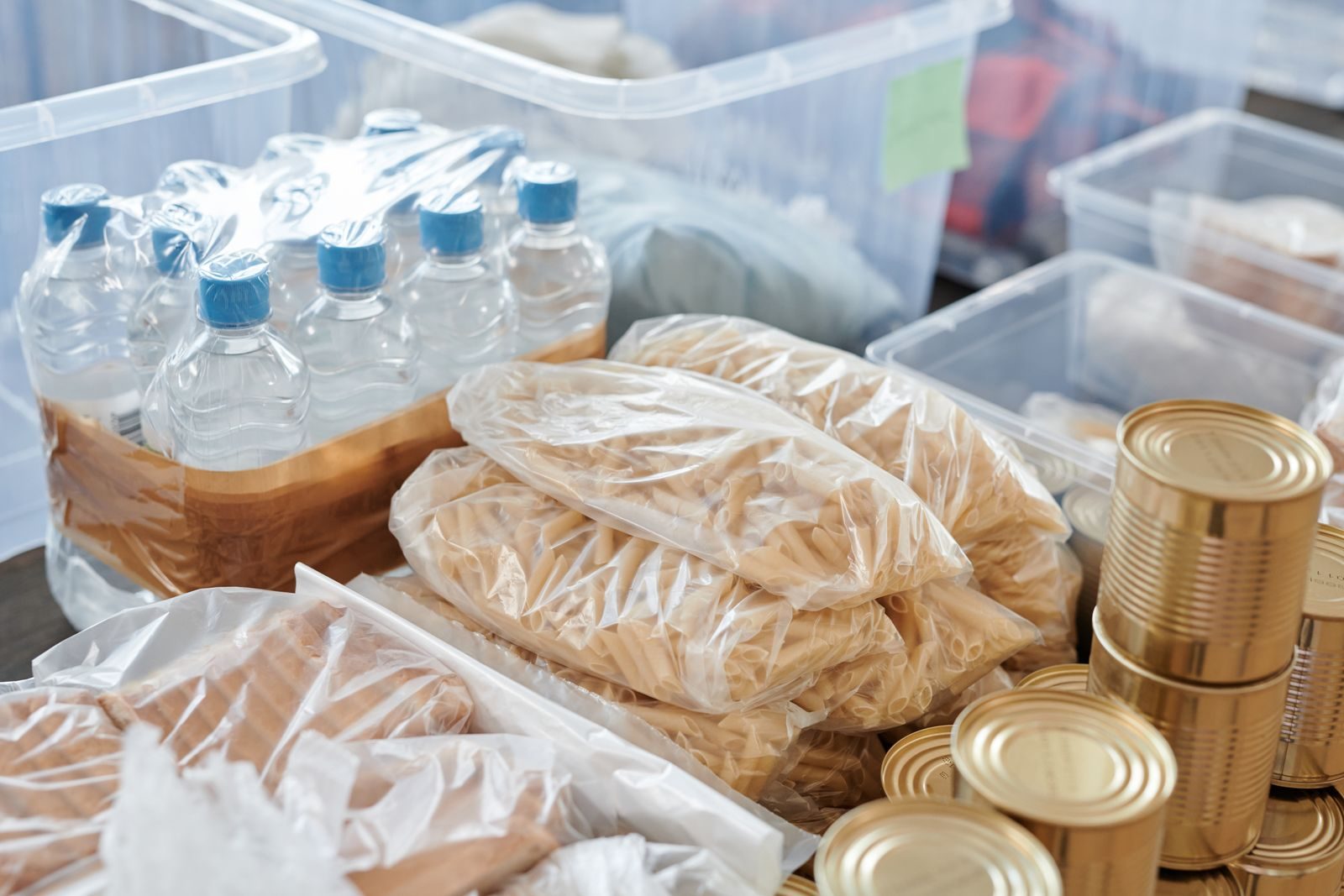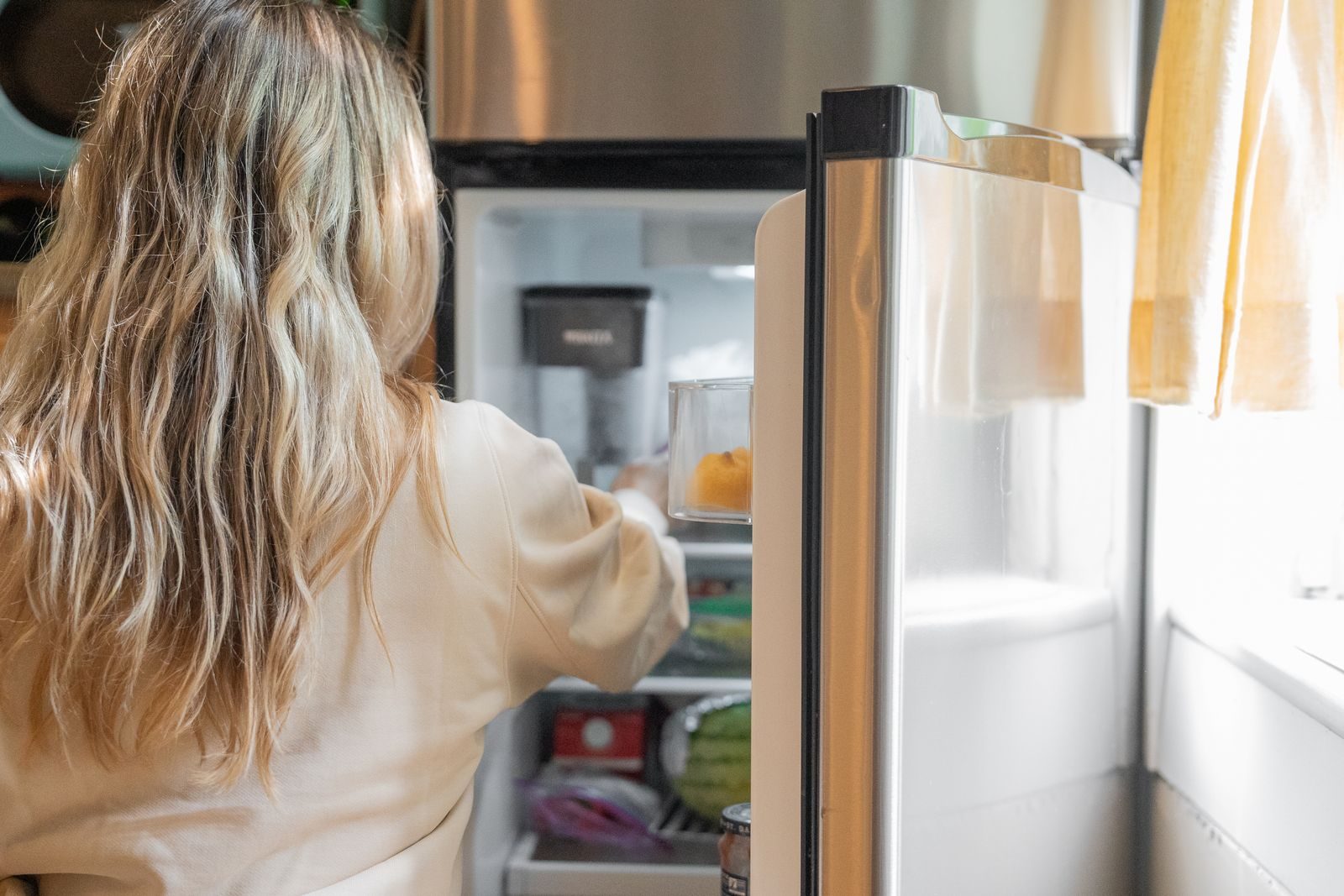
Keep the doors shut and watch the clock. With the doors closed, food stays safe for up to 4 hours in a fridge, 48 hours in a full freezer and 24 hours in a half-full one, according to the CDC and Health Canada. After that, a thermometer and a cooler decide what you keep.
The 4, 48 and 24 hour rule
| Appliance, doors closed | Food stays safe for up to | Safe temperature |
|---|---|---|
| Fridge | 4 hours | 40°F (4°C) or below |
| Full freezer | 48 hours | 0°F (−18°C) or below |
| Half-full freezer | 24 hours | 0°F (−18°C) or below |
Those hours assume the doors stay closed, so decide what you want before you open one. FEMA suggests taping a list of the freezer’s contents to its door. Ready.gov notes that bacteria grow fast between 40°F and 140°F (4°C and 60°C), which is why 40°F (4°C) is the line for everything below.
Set up before it happens
- Thermometers. Keep an appliance thermometer in the fridge and another in the freezer (CDC). Without them, you’re guessing.
- Frozen water and gel packs. The CDC suggests freezing both ahead. Filling the gaps is what turns a 24-hour half-full freezer into a 48-hour full one, and the jugs become drinking water as they melt.
- A cooler and a plan for ice. Block ice lasts longer than cubes. Allow 1 bag per cooler per day.
Eat in this order
- Fridge first. In the first hours, eat the perishables: leftovers, milk, yogurt, cut fruit, and meat you can cook on an outdoor grill.
- Freezer next. A full freezer keeps food safe about 48 hours, a half-full one about 24. Thawed food that still has ice crystals, or is at 40°F (4°C) or below, can be cooked or refrozen (CDC).
- Then the pantry. FEMA’s order is fridge, then freezer, then non-perishables. Our guide to what to eat when the power is out covers that part.
After 4 hours: coolers and ice
Once the fridge has been off for 4 hours, the CDC says to move perishables into a cooler with ice or frozen gel packs and keep them at 40°F (4°C) or below. That means meat, fish, eggs, milk, leftovers, and cut fruit and vegetables. Put a thermometer in the cooler too (Ready.gov).
For a long outage, Health Canada suggests moving food to a friend’s working fridge. It also says “Never leave frozen food outdoors, even in winter,” because sunshine thaws it and animals find it.
Dry ice can stretch the freezer. Ready.gov says 25 pounds (about 11 kg) keeps a 10 cubic foot (about 280 L) freezer below freezing for 3 to 4 days. Handle it with dry, heavy gloves and don’t let it touch the food.
What to keep and what to throw out
The CDC says to throw out perishable fridge food after 4 hours without power or a cold source, and Health Canada says to discard food that has sat at room temperature for 2 hours or more. For food that has been above 40°F (4°C) for more than 2 hours, the FoodSafety.gov chart, as reproduced by the Virginia Department of Health, sorts common items like this:
| Food | Above 40°F (4°C) for more than 2 hours |
|---|---|
| Hard cheese (cheddar, Swiss, Parmesan) and processed cheese | Keep |
| Butter and margarine | Keep |
| Uncut fresh fruit and vegetables | Keep |
| Opened canned fruit and fruit juice | Keep |
| Peanut butter, jelly, mustard, ketchup, pickles | Keep |
| Soy sauce, barbecue sauce, vinegar-based dressings | Keep |
| Bread, rolls, tortillas, bagels | Keep |
| Opened mayonnaise | Toss if it was above 50°F (10°C) for more than 8 hours |
| Meat, poultry, fish and lunch meat | Toss |
| Opened canned meat and fish | Toss |
| Soft and shredded cheeses | Toss |
| Milk and yogurt | Toss |
| Eggs | Toss |
| Opened baby formula | Toss |
| Cut fruit and vegetables | Toss |
| Cooked pasta, rice and potatoes | Toss |
| Soups and casseroles | Toss |
| Opened creamy dressings and spaghetti sauce | Toss |
Throw out cans that are swollen, dented, corroded or leaking as well (Ready.gov, Health Canada).
When in doubt, throw it out
Spoiled food doesn’t always look or smell bad, Health Canada warns. If you can’t say how long something has been above 40°F (4°C), throw it out.
Medicine, insulin and baby milk
Ready.gov says that if the power is out for more than a day, you should discard any medicine that needs refrigeration, unless the label says otherwise. Read the label before you throw anything out.
Insulin is more forgiving. The FDA says vials and cartridges, opened or unopened, can be left unrefrigerated at 59 to 86°F (15 to 30°C) for up to 28 days. Never use insulin that has frozen, so keep it in the cooler but off direct ice.
For babies, the CDC says to throw away opened or prepared formula that was in the fridge once the power has been off 4 hours or more. Expressed breast milk can stay in a cooler bag with frozen ice packs for up to 24 hours, and thawed milk can’t be refrozen. Our guide to babies and pets in a power outage has the rest.
If someone at home needs refrigerated medicine or stored breast milk, a second small cooler just for those is worth having. The food step of the kit builder includes a pair of fridge and freezer thermometers, with a cooler as an option.
Sources (8)
- CDC, Keep Food Safe After a Disaster or Emergency
- Health Canada, Food and drinking water safety in an emergency
- Ready.gov, Food
- Ready.gov, Power outages
- FEMA and American Red Cross, Food and Water in an Emergency
- Virginia Department of Health, Refrigerated Food and Power Outages (FoodSafety.gov chart)
- FDA, Insulin storage in an emergency
- CDC, Special Considerations for Infant Feeding in Emergencies
Turn the advice into a shopping list
Tell us who lives at home and how many days you want to cover. We work out the amounts, you pick what to buy and what you already have.
Build a kit for your household
About 5 minutes. We work out the amounts for you.