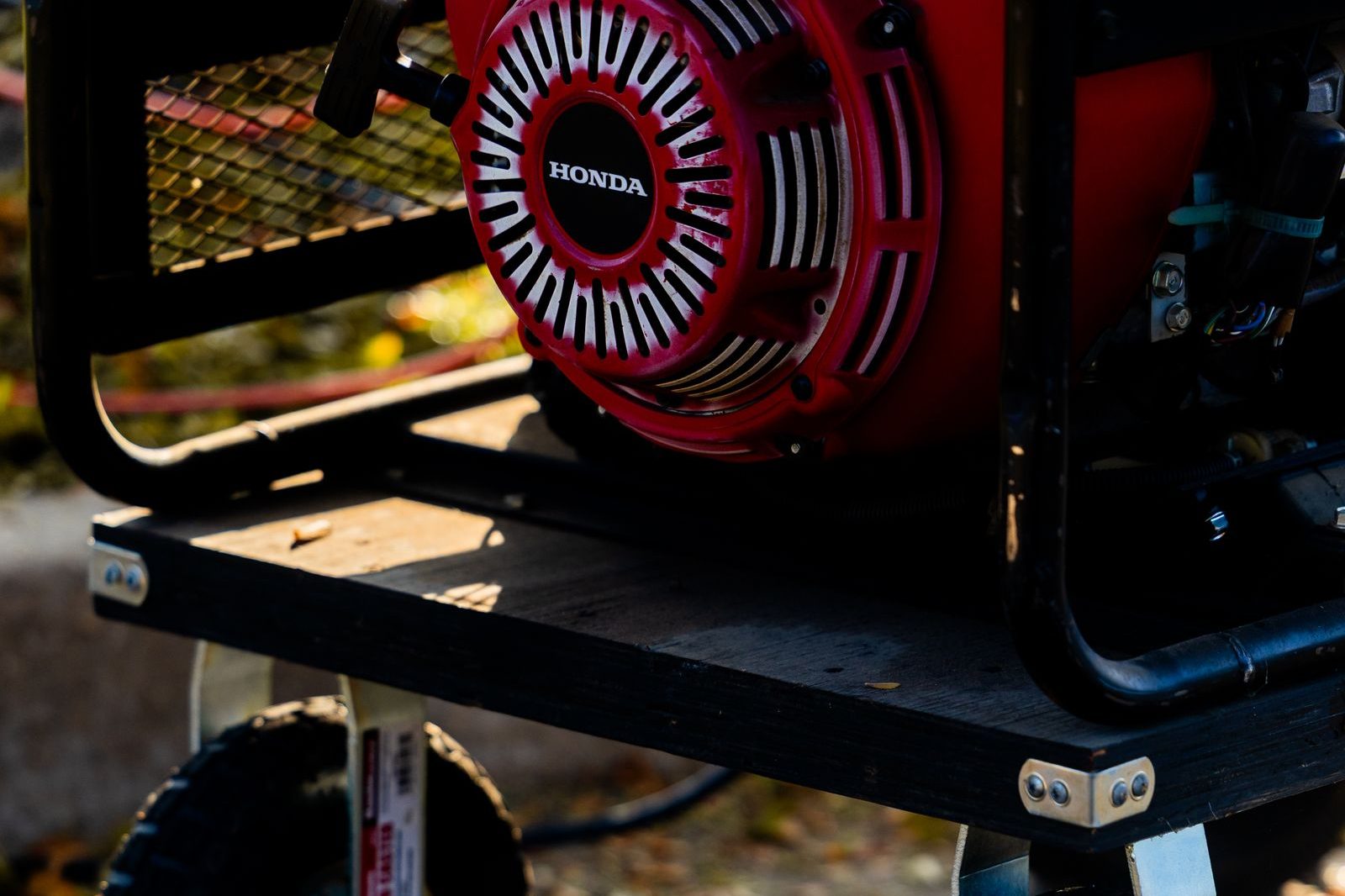
Carbon monoxide comes indoors with outages: from generators, grills, camp stoves, heaters and cars. You can’t see or smell it, so two habits do the work. Run anything that burns fuel outdoors, at least 20 ft (6 m) from windows, doors and vents, and keep a battery CO alarm working outside every sleeping area and on every level.
What the numbers say
The CDC says more than 400 Americans die each year from unintentional carbon monoxide poisoning not linked to fires. More than 100,000 visit an emergency department and more than 14,000 are admitted to hospital. Portable generators alone cause nearly 100 deaths a year, according to the CPSC, and its 2022 report found 81% of generator CO deaths happen at home. Weather-related outages were one of the top reasons the generator was running.
In the 2021 Texas winter storm, 19 people died of carbon monoxide from generators, grills, heaters, cars in enclosed spaces and vents blocked by ice. US fire departments answered 82,245 CO calls in 2023 (NFPA).
Where CO alarms go
- Outside the bedrooms. Health Canada calls the hallway outside sleeping areas the most important place for a CO alarm.
- On every level, basement included (NFPA, Ready.gov, CPSC). NFPA suggests a central spot on each level and interconnected alarms if you can.
- Battery-powered or battery backup. A plug-in alarm without a battery goes dark in an outage.
- In the heater room. If you run an indoor-rated propane heater (US only), add an alarm in that room.
Test alarms monthly (NFPA, CPSC). The CDC says to check batteries when the clocks change in spring and fall, and to replace the alarm on the maker’s schedule or every 5 years. During an outage, Public Safety Canada says to check the batteries again.
| Home | Working | CO alarms |
|---|---|---|
| Apartment | 1 outside the bedrooms | 1 |
| Two-level house | 2 levels × 1 | 2 |
| Two-level house with an indoor propane heater (US) | 2 levels × 1 + 1 for the heater room | 3 |
| Three-storey house in Ontario with a fuel-burning appliance | 3 storeys × 1 | 3 |
CSA 6.19 in Canada, UL 2034 in the US
Health Canada says to buy alarms with the CSA 6.19 mark on the alarm and the packaging. Since January 1, 2026, Ontario’s fire code requires a CO alarm next to each sleeping area and on every storey of homes with a fuel-burning appliance, a fireplace or an attached garage, and accepts CSA, ULC or Intertek marks. In the US, UL 2034 is the standard the CPSC tests alarms against.
When the alarm sounds
Get out first, then call
Get everyone outside to fresh air straight away, or to an open window or door if you can’t get out. Count heads, then call 911 or the fire department from outside. Don’t go back in until they say it’s safe. (NFPA, Public Safety Canada)
Where the generator goes
Outdoors only, at least 20 ft (6 m) from windows, doors and vents. The CDC, CPSC, Health Canada and Public Safety Canada all use the same distance, and Health Canada adds that the exhaust should point away from openings. The CPSC lists the places that don’t count as outdoors: garages, basements, sheds, porches and carports.
To reach the house from 20 ft away, the CDC says to use an extension cord more than 20 ft long. An outdoor-rated, heavy-duty cord of 25 ft (7.5 m) or more does it; check its amp rating covers what you plug in. If you’re buying, the CPSC suggests a model with CO shut-off. Whenever the generator runs, keep a battery CO alarm on inside.
| Equipment | Where it can run | Never |
|---|---|---|
| Portable generator | Outdoors, 20 ft (6 m) from windows, doors and vents | Garage, basement, shed, porch or carport (CPSC) |
| Camp stove or charcoal grill | Outdoors, 20 ft from windows (Ready.gov) | Inside a home, garage, shed, camper or tent (Health Canada) |
| Car | Outside, for charging phones | An attached garage, even with the door open (CDC) |
| Gas oven or range | Cooking | Heating the home (CDC) |
Never plug into a wall outlet
Plugging a generator into a wall outlet, called backfeeding, can energize the lines outside and injure utility crews and neighbours. The only safe link to your house wiring is an approved transfer switch or panel installed by a qualified electrician (Public Safety Canada, FEMA).
That’s also the only way to run hardwired loads such as a furnace, well pump or most sump pumps. They start with a big surge: Portland General Electric notes a well pump’s startup surge can be up to six times its running wattage, and many well pumps need 220 V. Have the switch fitted before storm season, not during the outage.
Storing fuel
FEMA’s rules are short. Keep gasoline in labelled, non-glass safety cans, outside living areas and away from anything with a pilot light, never in the house. Turn the generator off and let it cool before you refuel. Add fuel stabilizer to fresh gas you plan to store.
How much to keep depends on how long you run it. A 2,000 to 2,500 W inverter generator such as the Honda EU2200i runs about 8.5 hours per gallon at light load and 3.4 at full load. Twelve hours a day at light load is 12 ÷ 8.5 = 1.4 gallons (5.3 L) a day, or about 10 gallons (38 L) for a week. Two days on hand is 1.4 × 2 = 2.8 gallons, which fits in one 5-gallon (20 L) can. Refill as you go.
Camp stoves, grills and cars
Camp stoves and charcoal grills follow the generator rule: outdoors, at least 20 ft from windows (Ready.gov). The CDC says never to burn charcoal indoors. A car can charge phones, but only parked outside; Public Safety Canada says not to idle in a garage, even with the garage door open.
If you smell gas
If you smell gas or hear a leak, leave straight away and call the gas company from outside (CPSC). Ready.gov’s kit includes a wrench for turning off utilities, but getting out comes first.
Batteries make no carbon monoxide
Public Safety Canada points out that battery and solar “generators” make no CO, so a power station can sit in the living room. It won’t run a furnace or a space heater, but it covers phones, lights, the internet and a CPAP. For homes with no outdoor space, our guide to getting an apartment ready for an outage shows how to size one, and the power step of the kit builder does the sums for your list of devices.
Sources (16)
- CDC, Carbon monoxide poisoning basics
- CDC, Avoiding carbon monoxide poisoning
- CDC, What to do to protect yourself during a power outage
- CPSC, As winter storms impact millions, CPSC issues safety tips (2024)
- CPSC, New report on carbon monoxide fatalities (2022)
- CPSC, Carbon monoxide research and statistics
- NFPA, Carbon monoxide
- Health Canada, Carbon monoxide: preventing exposure
- Ontario Solicitor General, Carbon monoxide alarm requirements for homes
- Public Safety Canada, Power outages: how to prepare
- Ready.gov, Power outages
- Ready.gov, Build a kit
- FEMA, Fact sheet: be safe when using a portable generator
- Texas DSHS, February 2021 Winter Storm-Related Deaths
- Honda EU2200i specifications (dealer listing)
- Portland General Electric, Powering wells during a power outage
Turn the advice into a shopping list
Tell us who lives at home and how many days you want to cover. We work out the amounts, you pick what to buy and what you already have.
Build a kit for your household
About 5 minutes. We work out the amounts for you.