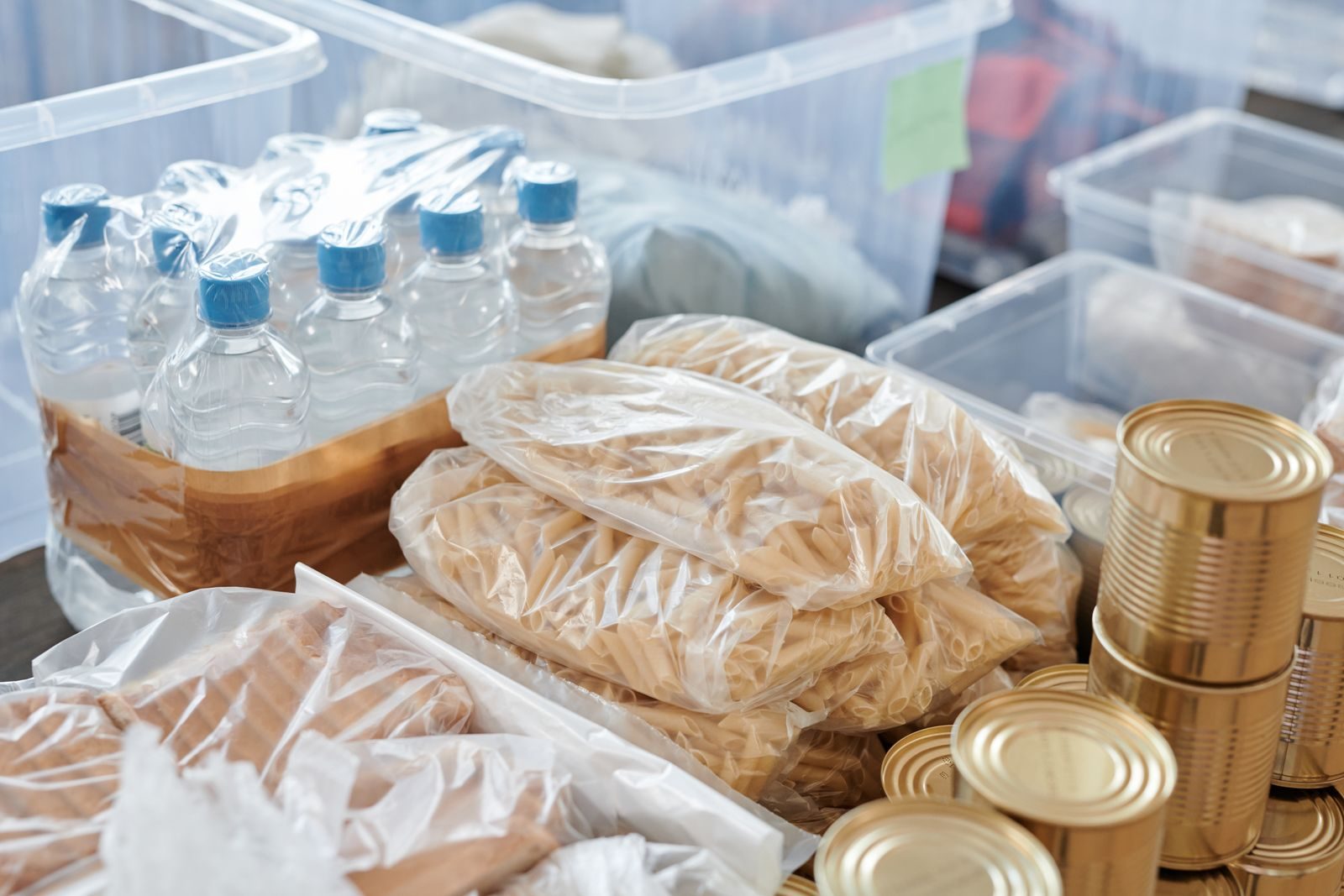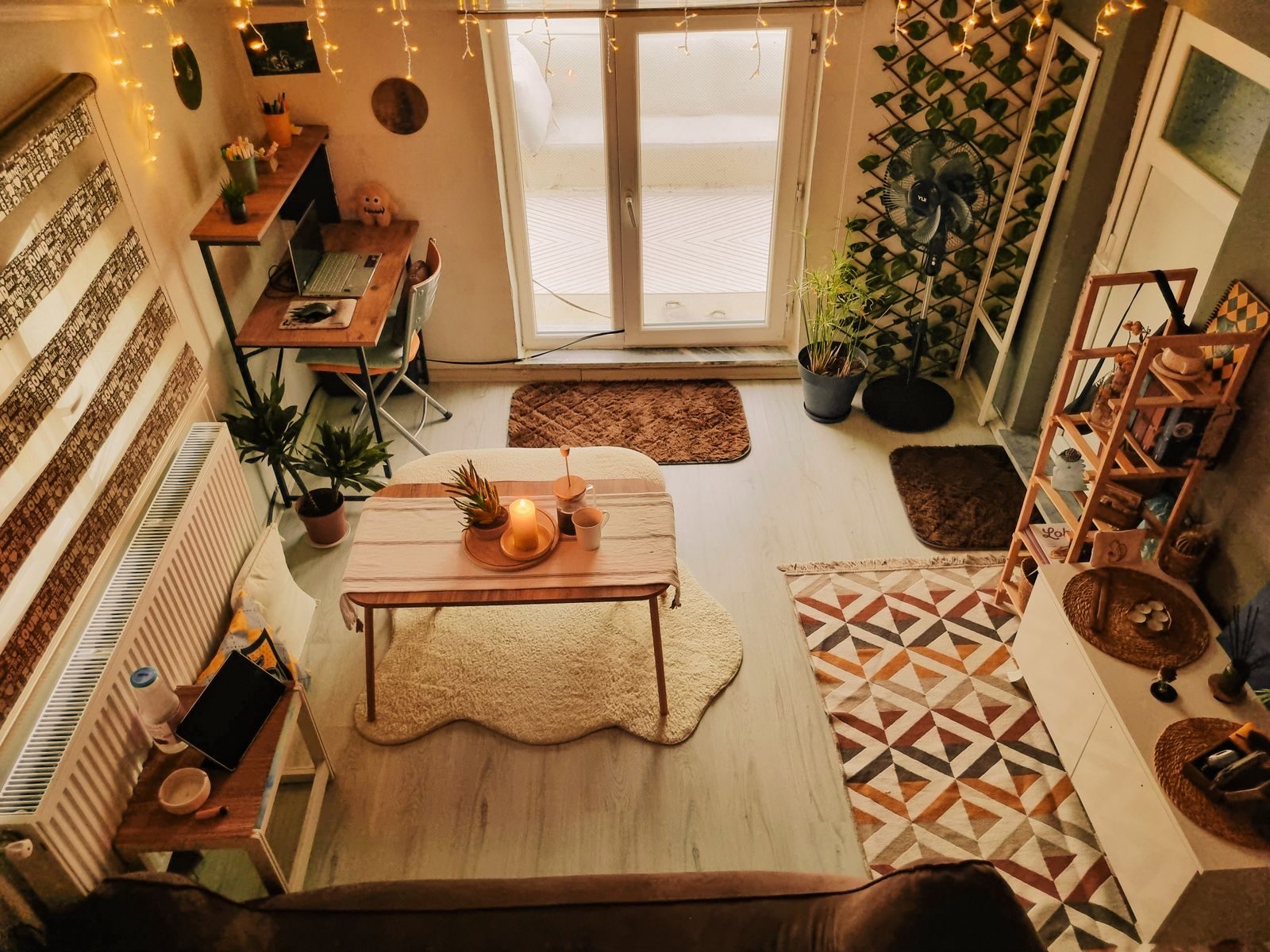
An apartment kit is smaller and simpler than a house kit: no fuel, no generator, water that stacks in a closet and battery power for phones, lights and the internet. What catches people out is the building itself. Elevators stop, water pumps on upper floors may stop with them, and the balcony is no place for a grill or heater.
Water that fits
You need as much water as anyone in a house: 1 gallon per person per day in the US, or 4 L in Canada. For two people and a week, that’s 2 × 7 × 1 gallon = 14 gallons (53 L), or 2 × 7 × 4 L = 56 L in Canada.
| Household | US, 7 days | Canada, 7 days | 7 gal (26 L) jugs |
|---|---|---|---|
| 1 person | 7 gal (26.5 L) | 28 L | 1 in the US; in Canada, 1 plus 12 small bottles |
| 2 people | 14 gal (53 L) | 56 L | 2 in the US, 3 in Canada |
| 4 people | 28 gal (106 L) | 112 L | 4 in the US, 5 in Canada |
- Fill big jugs where they’ll live. Rigid 5 to 7 gallon jugs are easy to refill, but a full 7-gallon jug weighs about 58 lb (26 kg).
- Use the dead space. Flat, stackable containers slide under a bed or stand on a closet floor. An inner room suits the CDC’s advice to keep water at 50 to 70°F (10 to 21°C) and out of sunlight.
- Keep some small bottles. Public Safety Canada suggests bottles that can be carried easily, which helps on the stairs. Twelve 500 mL (16.9 oz) bottles per person add 6 L to your total.
- Use the freezer. Water frozen in clean jugs keeps the freezer cold longer, then becomes drinking water as it melts.
- Date it. The CDC says to replace water you bottle yourself every six months.
Our guide to how much water to store covers containers and treatment in more detail.
No fuel indoors, and not on the balcony
Health Canada says never to use outdoor fuel, charcoal or wood equipment inside a home, and never to use kerosene, propane or oil heaters in enclosed areas unless they’re designed for indoor use.
A balcony isn’t far enough outdoors
Ready.gov says generators, camp stoves and charcoal grills belong outdoors, at least 20 ft (6 m) from windows. A balcony sits right beside your own windows and doors, and often your neighbours’, so it can’t meet that distance. The CPSC lists porches among the places a generator must never run.
So plan to eat without cooking. Our guide to what to eat when the power is out has a no-cook pantry list. For light, use headlamps and lanterns rather than candles: the CDC, CPSC and Public Safety Canada all say the same, and the NFPA finds over half of candle fires start when something that burns is too close to the flame.
Keep one battery CO alarm outside the bedrooms: Health Canada advises at least one, with battery backup, in any home with fuel-burning appliances. The City of Vancouver suggests an apartment keep one fire extinguisher mounted in the kitchen, near the exit.
Elevators, water pumps and toilets
Elevators stop when the power does, so anyone who can’t manage the stairs needs a plan before the outage. In taller buildings the water can depend on electric pumps too. If they have no backup power, taps and toilets on the upper floors stop with them.
That’s why the apartment kit includes emergency toilet bags. When nothing can be flushed, we plan 5 uses per person per day: 2 people × 7 days × 5 = 70 bags. A bag inside the bowl with a scoop of kitty litter does the job; our guide to toilets, hygiene and first aid in an outage has the steps.
Ask your building manager now, while everything works:
- Do the water pumps and elevators have backup power, and for how long?
- Who should know if a resident relies on powered medical equipment or can’t use the stairs?
- How will residents get updates during an outage?
Power: a smaller station or power banks
Without a generator, apartment power comes from batteries, and a power station makes no carbon monoxide, so it can sit in the living room (Public Safety Canada). Size it from what you’ll run each day:
| Device | Planning Wh a day |
|---|---|
| Phone, one full charge | 20 |
| Router and modem, 24 hours | 360 |
| LED lamp, per bulb | 45 in winter, 27 in summer |
| Laptop, one recharge | 70 |
| Battery fan, one night | 40 |
| CPAP with humidifier, one night | 180 |
| Single heated blanket, one night | 250 |
Take two adults with phones and two lamps in winter: 2 × 20 + 2 × 45 = 130 Wh a day. A 500 Wh station delivers about 500 × 0.85 = 425 Wh after conversion losses, so that’s about 3 days. Leave the router on around the clock and the day’s total becomes 490 Wh, more than the station delivers, so either run the internet only when you need it or plan to recharge every day.
For phones alone, power banks are enough. About 65% of a bank’s rated capacity reaches the phone (Anker), so a 20,000 mAh bank gives about 3 full charges. We plan half a charge per adult per day in low-power mode: 2 adults × 7 days × 0.5 = 7 charges, so 3 banks.
Two limits to know. Don’t run a space heater from a station: a 1,500 W heater empties a 1,000 Wh station in about 34 minutes. And charge the station every three months so it’s full when you need it. If you top up phones from the car, do it parked outside, never in a garage (Public Safety Canada).
Neighbours and the building
Living close together helps. In British Columbia’s 2021 heat dome, 98% of the 619 people who died were indoors, and most were older adults living alone. In the 2021 Texas winter storm, people aged 60 or older made up two thirds of the hypothermia deaths. Swap phone numbers with the neighbours on your floor and agree who will knock on the doors of anyone older or living alone. Health Canada suggests arranging regular visits for people at risk.
What the apartment kit includes
The apartment kit in our builder plans for 7 days and leaves out anything that burns fuel or needs a yard. It starts with:
- Water containers that stack in a closet, plus a filter and purification tablets
- Ready-made meals, a manual can opener and fridge thermometers
- A power station of about 500 Wh, and power banks for phones
- Lanterns, headlamps and batteries
- A crank or battery radio
- A first aid kit and emergency toilet bags
- One battery CO alarm and one fire extinguisher
- Warm bedding and hand warmers in winter, or fans in summer
There’s no camp stove, stove fuel, generator, extension cord or propane heater. Set your household and season before you start, and the builder sizes every amount to match.
Sources (21)
- Ready.gov, Water
- Health Canada, Food and drinking water safety in an emergency
- CDC, How to Create an Emergency Water Supply
- Public Safety Canada, Emergency kits
- Health Canada, Carbon monoxide: preventing exposure
- Ready.gov, Power outages
- CPSC, As winter storms impact millions, CPSC issues safety tips
- CDC, What to do to protect yourself during a power outage
- NFPA, Safety with candles
- City of Vancouver, Fire extinguishers
- Public Safety Canada, Power outages: how to prepare
- Cleveland Clinic, How often should you pee?
- Virginia Cooperative Extension, Estimating appliance and home electronic energy use
- EnergySage, How many watts does a Wi-Fi router use?
- FTC, Shopping for light bulbs
- ResMed, Power consumption of Air10 devices
- Jackery, What can Jackery 600 Plus run (runtime formula)
- Anker, 20000mAh power bank: how many charges
- BC Government, Coroners Service heat review
- Texas DSHS, February 2021 Winter Storm-Related Deaths
- Health Canada, Extreme heat: how to protect yourself
Turn the advice into a shopping list
Tell us who lives at home and how many days you want to cover. We work out the amounts, you pick what to buy and what you already have.
Build a kit for your household
About 5 minutes. We work out the amounts for you.